The Right Air Purifier for Your Home Size (and the $40 Box That Beats Most of Them)
Skip the marketing. Here's the math for sizing a purifier to your square footage — plus the DIY box the EPA has actually tested.
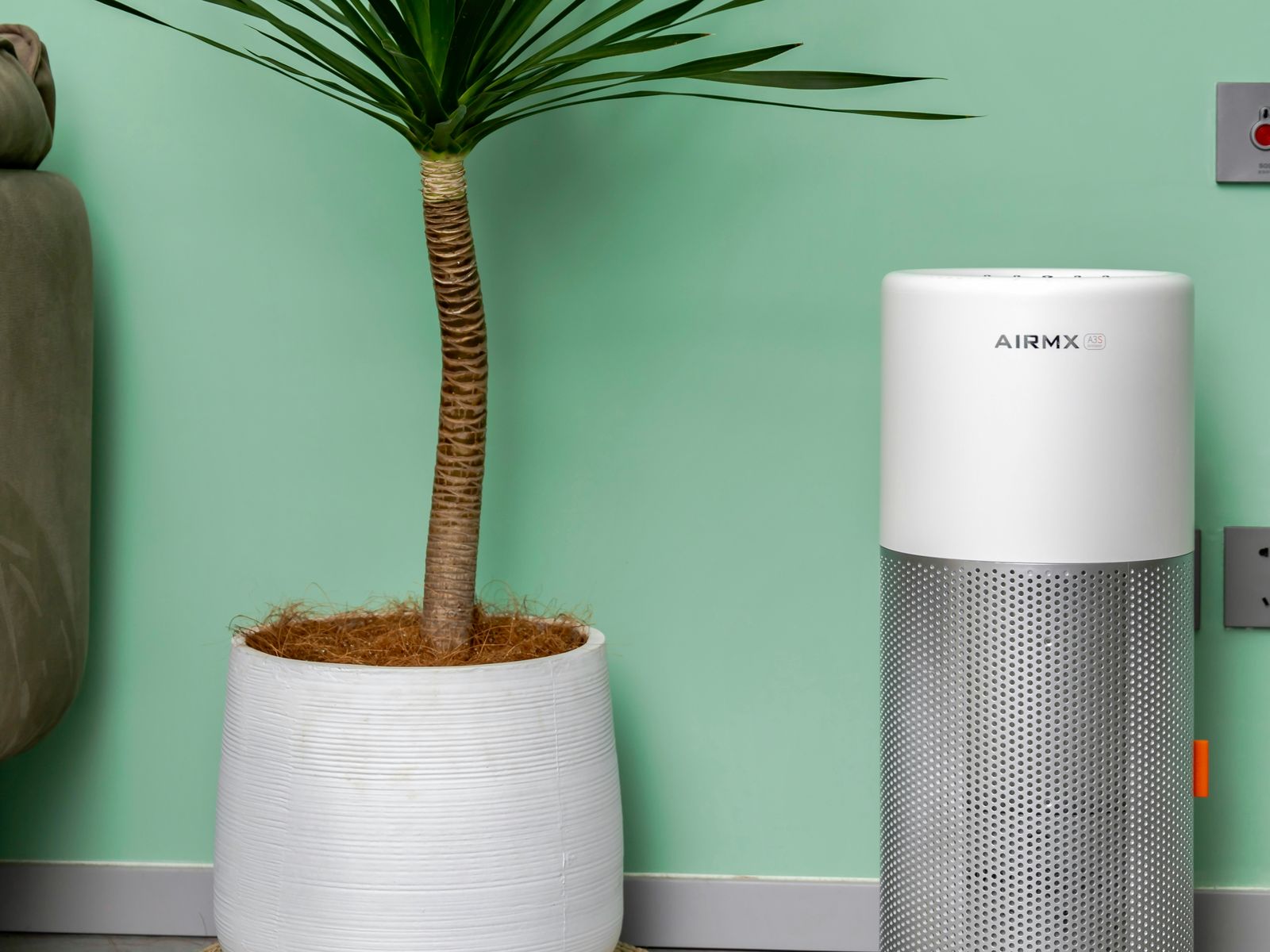
Match your air purifier's CADR — cubic feet of clean air it delivers per minute — to at least two-thirds of your room's square footage, and run a whole-home MERV-13 filter if you have central air. That's it; everything past that is marketing. A $40 box fan with furnace filters taped to it will out-clean plenty of purifiers that cost ten times as much, because it moves more air through better filters.
The short version
- Match CADR to at least two-thirds of your room's square footage — that's roughly 4-5 air changes per hour, the range that clears smoke.
- "HEPA-type" and "HEPA-like" are marketing terms with no standard behind them. Only "True HEPA" or "HEPA" (99.97% at 0.3 microns) means anything.
- If you have central forced-air heat or AC, a MERV-13 filter swap cleans your whole house for the price of one filter — no standalone unit required.
- A $30-40 Corsi-Rosenthal box (MERV-13 furnace filters taped around a box fan) beats many $200+ purifiers on clean air delivered per minute, and the EPA has tested and endorsed the design.
- Skip anything marketed as an "ionizer" or "ozone generator" — they add a lung irritant instead of removing one.
What is CADR, and why does it matter more than the price tag?
CADR — Clean Air Delivery Rate — is how many cubic feet of filtered air a purifier pushes out per minute, measured separately for smoke, dust, and pollen. It's the one spec that tells you what the machine actually does, and it's printed on the box or spec sheet of almost every purifier sold in North America. A unit with a high price and a low smoke CADR will underperform a cheaper one with a higher CADR, every time. Ignore star counts, wattage, and app features until you've checked this number.
The rule of thumb: CADR (in cfm) should be at least two-thirds of your room's square footage. A 300-square-foot living room needs a smoke CADR of roughly 200 cfm. That's the whole sizing exercise — the rest of this guide is just showing the math behind it so you're not trusting a manufacturer's "covers up to 1,500 sq ft" claim, which is often measured under generous assumptions.
How many air changes per hour do you actually need?
Air changes per hour (ACH) is how many times a purifier can filter the entire volume of a room in an hour. During wildfire smoke, aim for 4-5 ACH — enough to keep pace with smoke leaking in around doors and windows. The math is simple: multiply your CADR by 60, divide by the room's volume in cubic feet.
Take a 250-square-foot bedroom with 8-foot ceilings: 2,000 cubic feet. A purifier rated at 150 cfm smoke CADR moves 9,000 cubic feet an hour — 4.5 ACH. That's the sweet spot. Drop to a 75 cfm unit in the same room and you're at 2.25 ACH, which will run constantly and still lose ground on a bad smoke day.
What size purifier do I actually need for my home?
Once you're past a single bedroom, "whole-home coverage" claims stop meaning much — most portable units are built and tested for one room, not an entire floor plan. Here's how the two-thirds rule scales as square footage goes up.
| Home size | Target CADR (smoke) | Coverage approach |
|---|---|---|
| Studio / 1-bed (~250 sq ft) | 150-180 cfm | Single portable unit in the main room |
| Small apartment (~600 sq ft) | 350-400 cfm | One large-room unit plus a closed-door strategy, or two smaller units |
| Mid-size home (~1,000 sq ft) | 600-700 cfm | A unit per major room, or a MERV-13 filter in central HVAC if you have forced air |
| Large home / whole-home (~2,000+ sq ft) | Whole-home, not single-unit | MERV-13 in central HVAC (best option if you have ducted heat/AC), or DIY boxes in each occupied room |
Past about 1,000 square feet, buying more portable units stops being the efficient answer — your HVAC system is.
Is "True HEPA" different from "HEPA-type"?
Yes, and it's not a small difference. "HEPA" and "True HEPA" mean the filter captures 99.97% of particles at 0.3 microns — a specific, testable standard. "HEPA-type," "HEPA-like," or "99% HEPA" are marketing phrases with no enforced definition behind them; they can mean anything from a genuinely good filter to a cheap fiber mat. If the listing doesn't say "True HEPA" or "HEPA" without a qualifier, assume it isn't one.
Can my furnace or central AC do the job instead of a standalone unit?
If you have forced-air heating or central AC, upgrading your furnace filter to MERV-13 is the single most efficient move you can make — one filter change, and every room your ductwork reaches gets continuously filtered air. Not every system can handle MERV-13 without extra fan strain, so check your furnace manual or ask an HVAC tech before you commit to it as your only line of defense. For anyone without ducted air, this option isn't available, which is exactly where the standalone-unit or DIY-box math above takes over.
What's the Corsi-Rosenthal box, and is it really better than a store-bought purifier?
The Corsi-Rosenthal box is four or five MERV-13 furnace filters taped into a cube around a box fan, facing inward so air is pulled through the filters and pushed out clean. It costs about $30-40 in parts, takes fifteen minutes to build, and testing has consistently shown it delivers a CADR competitive with — or better than — purifiers costing several times as much, because a box fan simply moves more air than most purifier motors. It's not a hack in the pejorative sense: the design came out of engineers and researchers responding to real wildfire smoke seasons, and it's referenced in EPA guidance on DIY air cleaners.
The tradeoffs are real too — it's bulkier, louder at high speed, and less polished sitting in a living room. If you don't mind the look, it's the best dollar-for-dollar option on this list.
What should you never buy?
Skip anything marketed as an "ionic" or "ionizing" purifier, or an "ozone generator" sold as an air cleaner. These devices work by charging particles or releasing ozone, and the EPA's own testing has found they can add a lung irritant to your air with little to no measurable cleaning benefit — the opposite of what you're trying to do during a smoke event. If a listing brags about "no filters to replace" using ionization, that's the red flag.
One practical safety filter: California Air Resources Board (CARB) certification. CARB requires air cleaners sold in the state to meet ozone-emission limits, and it maintains a public list of certified devices. Even if you're not in California, checking a model against that list is a fast way to rule out the ozone-emitting units.
What do noise and filter costs actually add up to?
The ongoing costs are where a lot of purifiers quietly disappoint. Replacement HEPA filters typically run $20-80 depending on the unit and need swapping every 6-12 months with regular use — factor that into the sticker price before comparing models. Noise matters just as much: a purifier that's too loud to run on its high setting (the setting that actually hits your target CADR) will get turned down to a quiet setting that does far less work. Check the decibel rating at the speed you'll actually use, not just the lowest one listed in the spec sheet.
When should you actually run it?
A purifier only matters when the air outside is bad enough to get inside. Check your live number for your city before deciding whether tonight's a run-the-filter-on-high night or a windows-open night — the same reading also tells you how many cigarettes' worth of smoke you're breathing, explained on the methodology page. If you're still figuring out what the AQI number itself is telling you, that's covered separately in what your AQI number means.
Sources & further reading. EPA, "What is a HEPA filter?"; EPA, "Air Filters and Air Cleaners" (MERV ratings); EPA, "Ozone Generators that are Sold as Air Cleaners"; Clean Air Crew, Corsi-Rosenthal box build instructions; California Air Resources Board, certified air cleaning devices list.
Common questions
What CADR do I need for a bedroom during wildfire smoke?
Use the two-thirds rule: CADR (in cfm) should be at least two-thirds of the room's square footage. A 150-square-foot bedroom needs roughly 100 cfm; most single-room purifiers list 100-200 cfm, so check the box before you buy.
Does a HEPA filter actually remove wildfire smoke particles?
Yes. True HEPA filters capture 99.97% of particles at 0.3 microns, which covers the fine PM2.5 that makes up wildfire smoke. "HEPA-type" or "HEPA-like" products aren't held to that standard and can perform far worse.
Is a Corsi-Rosenthal box safe to run for hours during a smoke event?
Yes — it's just a box fan pulling air through MERV-13 furnace filters, no different in principle from a purifier's fan-and-filter design. Run it in a room you're actually occupying, and expect it to be louder than a purpose-built unit.
Should I buy an air purifier that uses ionization or produces ozone?
No. The EPA has found these devices produce ozone, a lung irritant, often at levels that provide little to no measurable improvement in indoor air quality. Stick to mechanical HEPA filtration.