What Your AQI Number Actually Means
The scary number on your phone, decoded — six color bands, what each one means for your lungs, and the exact point where you should stop going outside.
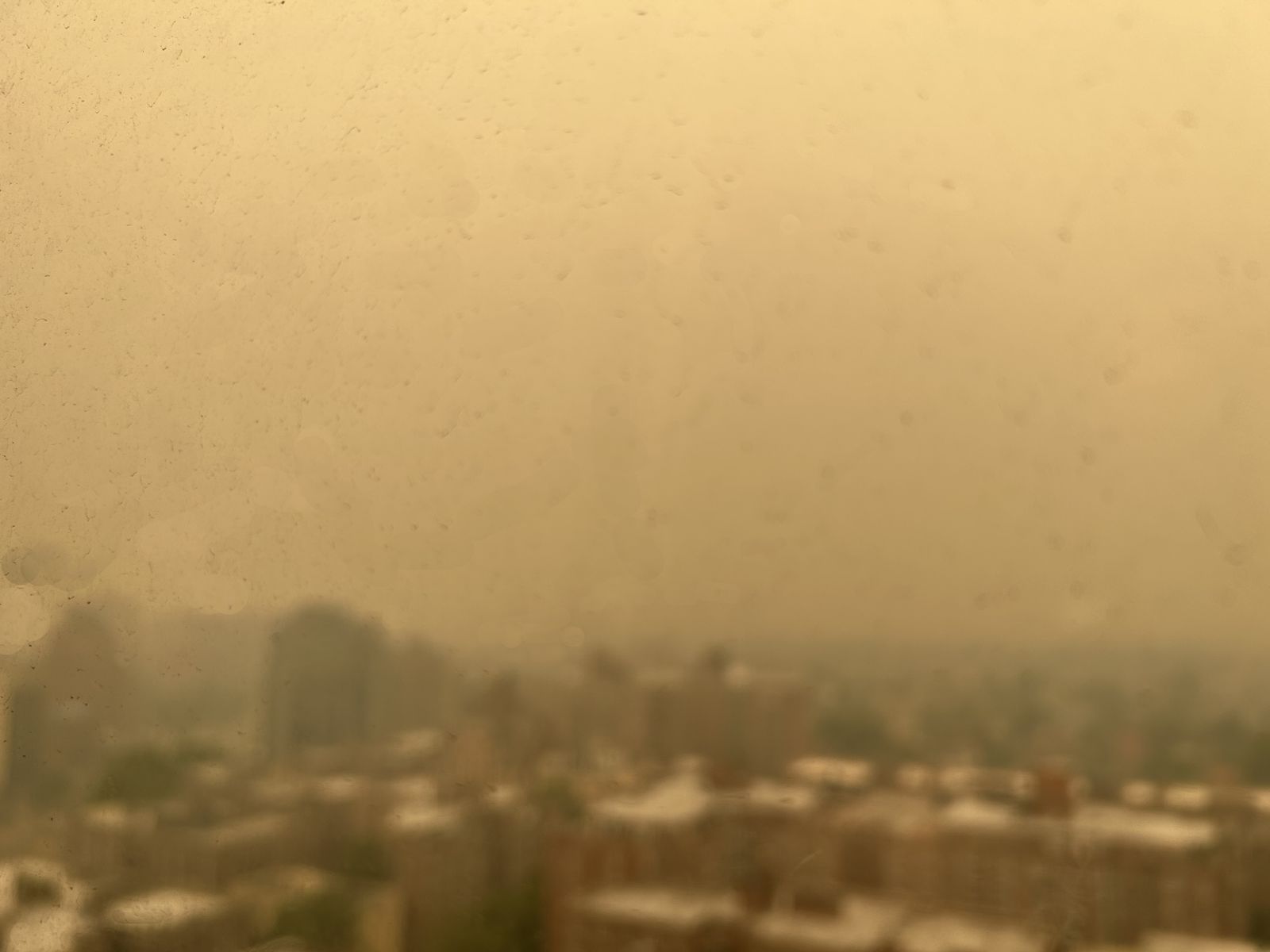
AQI is not the pollution itself — it's a 0-to-500 score the US EPA calculates from the raw PM2.5 (and other pollutant) readings in the air, sorted into six color bands that tell you how worried to be and what to actually do. Anything from 0–50 (green) means go about your day; 151 and up (red) means everyone should limit time outside; 301+ (maroon) means stay in and keep windows shut. The number on your phone is a translation of a real measurement — micrograms of fine particles per cubic meter of air — into a stoplight you can act on.
The short version
- AQI is a calculated index (0–500); the raw measurement underneath it is PM2.5 in µg/m³.
- Six color bands, each with a different instruction — from "normal day" to "stay inside."
- PM2.5 (particles ≤2.5 microns) is the number that matters in wildfire smoke because it's small enough to reach deep into your lungs and bloodstream.
- The US AQI and Canada's AQHI are different scales built differently — don't compare them directly.
- WHO's guideline for safe 24-hour PM2.5 exposure (~15 µg/m³) is stricter than most of the EPA's "green" zone.
What does the AQI number actually measure?
AQI stands for Air Quality Index, and it's a conversion, not a raw reading. Monitors and satellites measure actual pollutant concentrations — PM2.5 in micrograms per cubic meter (µg/m³), ozone in parts per billion, and so on. The EPA then runs the worst pollutant of the moment through a formula that maps its concentration onto a 0–500 scale. Whatever pollutant produces the highest sub-index is the one that sets your AQI for that hour. During wildfire smoke, that's almost always PM2.5.
This matters because two cities can report the same AQI number for very different reasons — one from ozone on a hot day, one from smoke — and the health advice for each is different. When smoke is involved, the AQI is really just PM2.5 wearing a different unit.
What are the six AQI color bands, and what should you do in each?
The EPA scale has six official categories. Each one comes with a specific action, not just a mood.
| AQI band | Approx. PM2.5 (µg/m³, 24-hr) | Who's affected | What to do |
|---|---|---|---|
| 0–50 Good | ~0–9 | No one | Normal outdoor activity, no restrictions. |
| 51–100 Moderate | ~9–35 | Unusually sensitive individuals | Most people are fine; if you notice symptoms (cough, tight chest), ease off intense outdoor exercise. |
| 101–150 Unhealthy for Sensitive Groups | ~35–55 | Kids, older adults, pregnant people, asthma/heart/lung disease | Sensitive groups cut back on prolonged or heavy outdoor exertion; everyone else can stay active but watch for symptoms. |
| 151–200 Unhealthy | ~55–125 | Everyone, sensitive groups more so | Sensitive groups avoid outdoor exertion; everyone else limits prolonged time outside. |
| 201–300 Very Unhealthy | ~125–225 | Everyone | Sensitive groups stay indoors; everyone else avoids prolonged outdoor exertion. |
| 301+ Hazardous | ~225+ | Everyone | Stay indoors, keep windows shut, run an air purifier if you have one, avoid all outdoor exertion. |
The PM2.5 numbers in that table are approximate — the EPA's actual conversion formula is more precise and gets revised periodically, so treat these as ballpark, not gospel. What doesn't change is the pattern: as PM2.5 climbs, the instruction shifts from "carry on" to "sensitive groups pull back" to "everyone pulls back" to "stay inside." If you're trying to decide whether it's safe to go outside today, this table is the fast answer.
Why does PM2.5 matter more than the other pollutants in smoke?
PM2.5 means particulate matter 2.5 microns or smaller — about 30 times thinner than a human hair. Bigger particles get caught by your nose and throat. PM2.5 doesn't. It travels straight down into the deepest part of your lungs, and some of it crosses into your bloodstream. That's why wildfire smoke — which is overwhelmingly fine particulate — is treated as more dangerous per microgram than, say, road dust or pollen. Ozone and other pollutants matter on hot, sunny, low-wind days; during a smoke event, PM2.5 is almost always the pollutant driving the AQI number.
The number on your phone isn't the weather — it's what's currently in your lungs.
Is Canada's AQHI the same as the US AQI?
No, and mixing them up is the single most common AQI mistake. The US AQI runs 0–500 and is calculated pollutant-by-pollutant, then reports whichever one is worst. Canada's Air Quality Health Index (AQHI) runs 1 to 10+ and blends PM2.5, PM10, nitrogen dioxide, and ozone into one combined health-risk score, with categories of Low Risk (1–3), Moderate Risk (4–6), High Risk (7–9), and Very High Risk (10+). A Canadian city reporting an AQHI of 7 is not "worse" than a US city's AQI of 150 just because 150 is a bigger number — they're different math entirely. If you're checking air quality on both sides of the border (or reading about the 2026 wildfire season), look up which scale the source is actually using before comparing two cities.
Is a "green" AQI reading actually safe?
Safer, yes — safe by the strictest standard, not always. The World Health Organization's air quality guideline for PM2.5 is roughly 15 µg/m³ averaged over 24 hours. Depending on exactly where the EPA's breakpoints fall in a given revision, that WHO threshold can sit inside the upper half of the "Moderate" band — meaning air the EPA still calls low-risk can already exceed what WHO considers a safe daily exposure. Neither scale is wrong; they're answering different questions. EPA/AQHI bands tell you the acute health risk right now, particularly for sensitive groups. WHO's guideline is aimed at long-term population health. If you have asthma, are pregnant, are very young or very old, or just want the more cautious read, treat "Moderate" as your cue to start paying attention, not as a free pass.
What should you actually do when you see a bad number?
Check your real, current number — not yesterday's forecast, not the number for the nearest big city 40 miles away. Local smoke plumes can turn a "Good" morning into a "Very Unhealthy" afternoon within a few hours. Once you know your PM2.5 reading, converting it into cigarettes smoked (Berkeley Earth's ~22 µg/m³-per-cigarette rule) makes the health cost concrete instead of abstract — see how that math works. If your air is bad and staying bad, the fastest fix isn't waiting it out — it's finding air that isn't. Check your city's live number and see which nearby towns have cleaner air within a reasonable drive.
Sources & further reading. EPA AirNow — AQI Basics; EPA — Particulate Matter (PM) Basics; Environment and Climate Change Canada — Air Quality Health Index; World Health Organization — Ambient Air Quality and Health.
This article is general information, not medical advice. If you or someone in your household has a heart or lung condition, is pregnant, or is having trouble breathing, talk to a doctor about smoke exposure specific to your situation.
Common questions
What AQI number is considered unhealthy?
101–150 is "Unhealthy for Sensitive Groups" — kids, older adults, and anyone with asthma or heart or lung disease should cut back on outdoor exertion. At 151 and up, it's unhealthy for everyone, not just sensitive groups.
What's the difference between AQI and AQHI?
AQI is the US EPA's 0–500 scale built mainly from PM2.5 and ozone. Canada's AQHI runs 1–10+ and blends PM2.5, PM10, NO2, and ozone into a single health-risk number. They're not interchangeable — a Canadian city's "4" isn't the same air as a US city's AQI of 4.
Is an AQI in the 'green' zone actually safe to breathe?
It's low-risk, but not necessarily below WHO's stricter 24-hour PM2.5 guideline of about 15 µg/m³ — which can fall inside EPA's "Moderate" (green-adjacent) band. Green means low risk for the general population, not zero exposure.
How do I turn an AQI number into something I actually feel?
Convert the underlying PM2.5 reading into cigarettes smoked, using Berkeley Earth's rule that about 22 µg/m³ over 24 hours equals one cigarette. See how ToClearSkies calculates that for any city.