Your Pets Are Breathing the Same Smoke You Are
Dogs, cats, and birds can't tell you their chest hurts. Here's how to read the signs — and the exact number that tells you it's a bad day for the whole household.
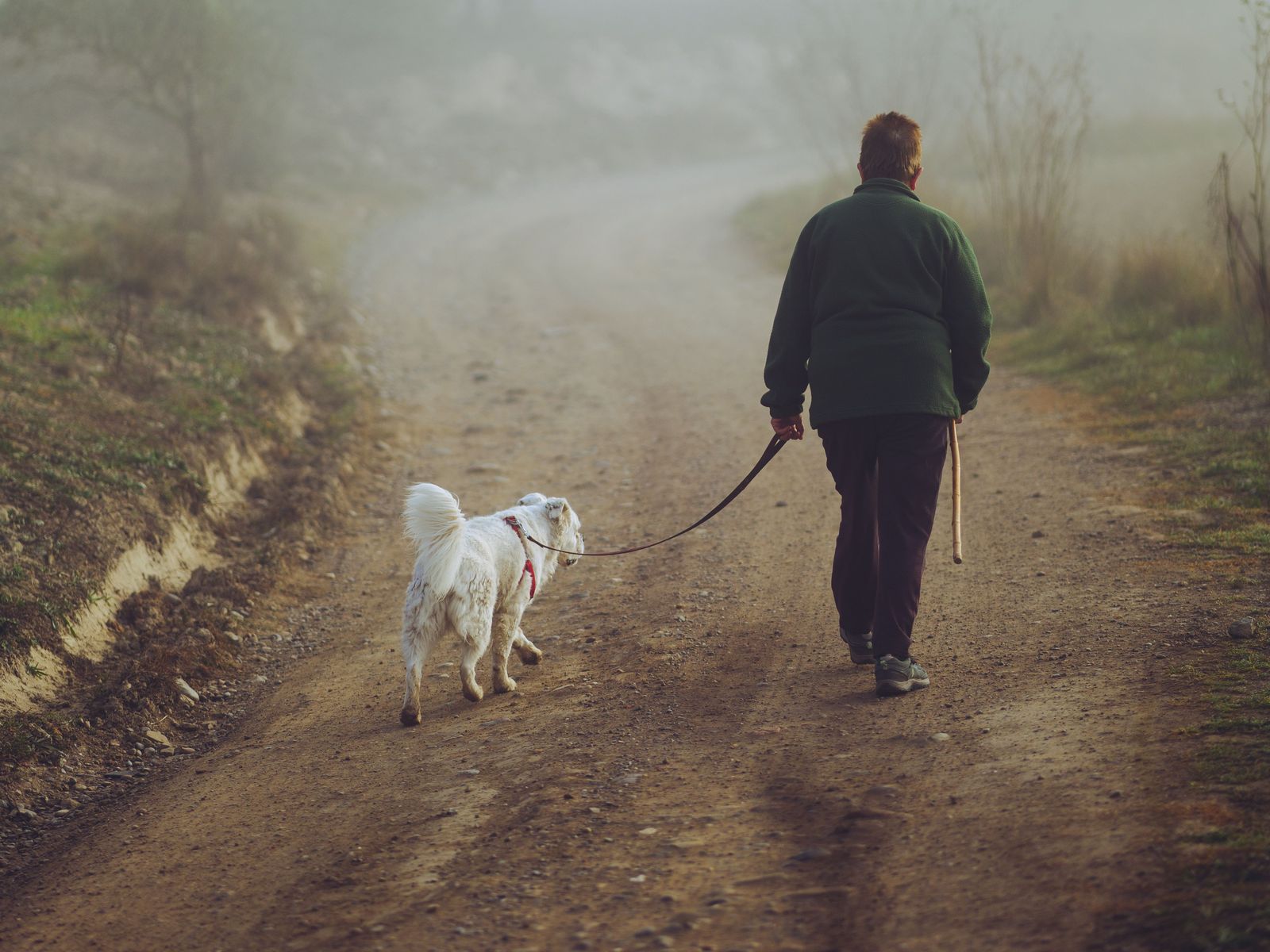
Your dog can't tell you her chest feels tight. Your cat can't say the air smells wrong. But they're breathing the exact same PM2.5 you are — often more of it, since they're closer to the ground where smoke settles, and their breathing rates are faster than yours. On a day the air is bad enough to check before you walk out the door, it's bad enough to check before you let the dog out too.
The short version
- Pets breathe the same wildfire smoke you do — smaller lungs, faster breathing, closer to the ground, and no way to tell you they feel sick.
- Dogs need shorter, calmer walks; cats mostly self-limit if you let them stay in; birds are the most sensitive of all and should never be near smoky air.
- Watch for coughing, labored breathing, eye or nose irritation, lethargy, and loss of appetite — blue or grey gums mean an emergency vet visit now, not later.
- Senior pets, puppies and kittens, flat-faced breeds like pugs, bulldogs, and Persians, and any pet with heart or lung disease need extra caution on smoky days.
- No, dogs and cats can't wear an N95 — skip the mask and keep them in a filtered room instead.
Do wildfire smoke symptoms look different in dogs, cats, and birds?
Yes, and it's worth knowing the pattern for each. Dogs tend to show it during and after exertion — a walk that ends in coughing, or heavier panting than the heat alone explains. Short potty breaks are fine on most smoky days; hard exercise isn't. Cats are usually better at self-limiting than dogs — they'll often just refuse to go outside, which is the right instinct. Let them. The risk with cats is more about indoor air quality when a home isn't well sealed or filtered. Birds are in a different category entirely. Their respiratory systems are extraordinarily efficient at pulling oxygen from the air — which is exactly why they're so vulnerable to what's in that air. Birds are the literal origin of "canary in the coal mine," and it's not an exaggeration with wildfire smoke: particulate levels that a dog or cat shrugs off can seriously harm or kill a bird. Any pet bird needs to be in the cleanest, most sealed-off room in the house on a smoky day, full stop — never on a porch, balcony, or near an open window.
What symptoms mean it's time to call the vet — or go now?
Most smoke exposure in pets is mild and resolves once the air clears and they rest indoors. But some signs mean don't wait. Use this as a rough guide, not a replacement for actually calling your vet when you're unsure:
| Symptom | What it likely means | Action |
|---|---|---|
| Occasional coughing or gagging | Airway irritation from particulates | Monitor at home; limit outdoor time |
| Labored or noticeably fast breathing | Lungs working harder than normal | Call your vet today |
| Red, watery eyes or nasal discharge | Irritation from smoke, similar to your own eyes stinging | Monitor at home; rinse eyes if advised by your vet |
| Lethargy or unusual weakness | Body working to compensate for poor air quality | Call your vet today |
| Reduced appetite | Common, mild stress response to bad air and disrupted routine | Monitor at home; recheck within 24 hours if it continues |
| Disorientation or stumbling | Possible sign of oxygen deprivation | Emergency vet now |
| Blue or grey gums or tongue | Not getting enough oxygen | Emergency vet now |
Which pets are most at risk?
Age and anatomy matter as much as species. Senior pets and very young puppies or kittens have less respiratory reserve to draw on. Pets with existing heart or lung disease — including cats with asthma or dogs with collapsing trachea — can decompensate fast when the air quality drops. And brachycephalic, or flat-faced, breeds — pugs, French and English bulldogs, Persian cats — already work harder to breathe in normal air because of their airway structure. Add smoke on top of that and they tire out and struggle much sooner than a longer-nosed dog or cat would. If your household includes any of these, treat "moderate" smoke days the way other pets treat "unhealthy" ones — shorter breaks, closer watching, lower threshold to call the vet.
What should you actually do at home during a smoky week?
The basics do most of the work. Limit outdoor time to quick bathroom breaks — no fetch, no runs, no long walks — and bring pets back in right after. Skip hard exercise entirely until the air clears. Set up one room with the best filtration you have — a closed room with an air purifier, or at minimum the room farthest from doors and windows — and let that be home base for the day. Keep fresh water out; pets that are working harder to breathe can dehydrate faster. Don't shave a dog or cat's coat thinking it'll help them handle the heat and smoke — that coat is doing real work filtering what reaches their skin, and shaving it doesn't improve lung protection at all. And skip the human masks: dogs and cats can't get the seal an N95 needs to actually filter anything, and most won't tolerate wearing one long enough for it to matter anyway. Clean indoor air protects them far more than a mask ever could.

Roughly 22 micrograms of PM2.5 per cubic meter, sustained over a day, works out to about one cigarette's worth of particulate exposure — and your pets are breathing that same air, cigarette for cigarette, right alongside you.
The number that tells you it's a bad-air day for you is the same number that tells you it's a bad-air day for the whole household, pets included. Check it before you head out — or before you let the dog out — at ToClearSkies. If the air is staying bad for days, not hours, that's the point where finding cleaner air within a drive stops being optional and starts being the better call for everyone under your roof, paws included.
Sources & further reading. American Veterinary Medical Association, pet care and disaster preparedness resources; ASPCA, disaster preparedness for pets; American Kennel Club, dog health advice library; UC Davis School of Veterinary Medicine, veterinary health news.
This article is general information, not veterinary advice. If your pet is showing breathing trouble, blue or grey gums, or any symptom that worries you, call your vet or an emergency animal hospital right away.
Common questions
Can I put an N95 mask on my dog or cat?
No. Dogs and cats can't get the tight seal an N95 needs to filter anything, and most won't tolerate wearing one long enough for it to help. Shortening outdoor time and cleaning the air they breathe indoors does far more good than a mask ever would.
What's the safest way to let my dog out during heavy smoke?
Quick potty breaks only — no fetch, no runs — then straight back inside. If your dog is a pug, bulldog, or other flat-faced breed, or has heart or lung disease, keep breaks even shorter and watch closely for labored breathing.
Should I bring my pet birds inside during wildfire smoke?
Yes, always, and keep them in your most sealed, best-filtered room. Birds have extremely efficient, exposed respiratory systems — they're the literal 'canary in the coal mine' — and smoke levels that barely bother a dog or cat can seriously harm a bird.
What symptoms mean I should stop watching and go to the emergency vet?
Blue or grey gums or tongue, disorientation, collapse, or breathing that looks labored even at rest. Those are emergency signs, not wait-and-see signs — call an emergency vet immediately.